

MARTIN AUDIO AND TIMAX DELIVER IMMERSIVE SOUND FOR VACHE BAROQUE 2026 FESTIVAL
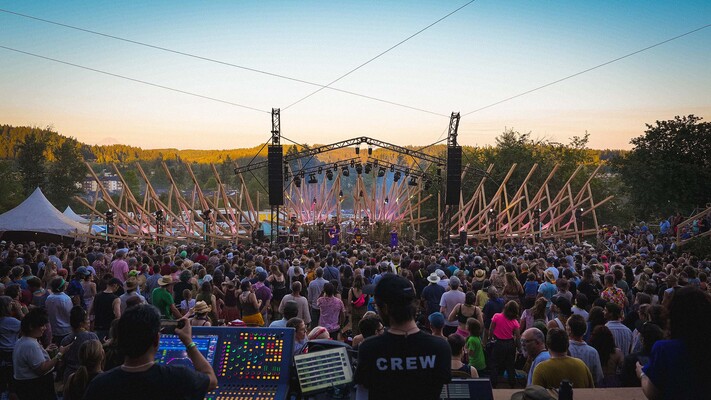
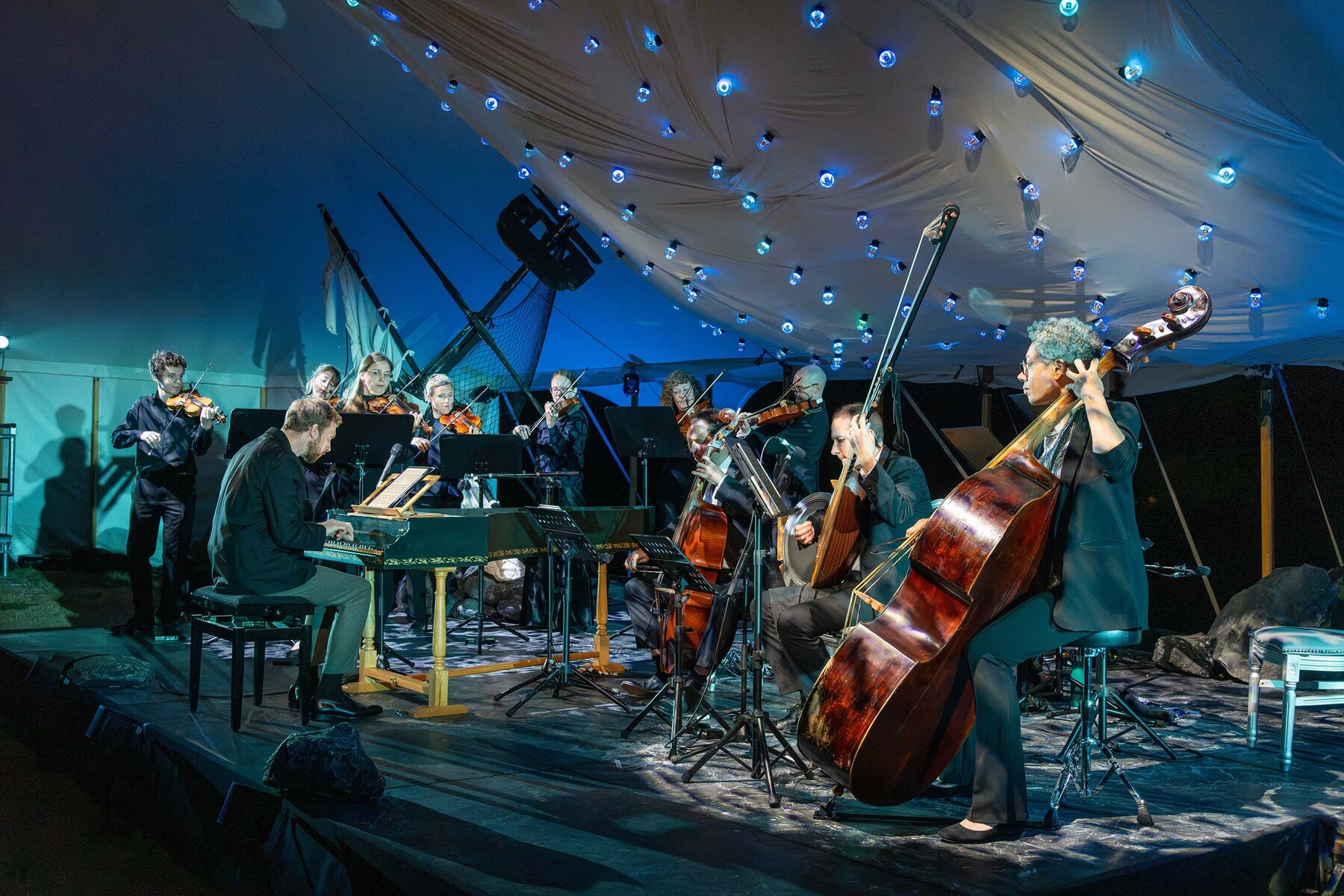
Vache Baroque is an ensemble of musicians with a mission to connect the broadest possible range of people with the power and drama of Baroque music. Its 2026 Festival brought together a programme of music and drama in the grounds of The Vache, a historic estate and manor house in Buckinghamshire with origins dating back to the Domesday Book of 1086. Fittingly, the estate’s lake provided the backdrop to a Festival built around a ‘water’ theme. Sound for every event was delivered through a sophisticated Martin Audio system, with spatial audio handled by TiMax.
The main show, produced in conjunction with acclaimed theatre company Out Of Chaos, was a semi-operatic production of Shakespeare’s The Tempest, underpinned by an atmospheric multi-channel landscape created by Dan Samsa. Further events included a jazz evening; a ‘Water Music‘ concert interspersed with rare recordings by triple BAFTA-winning wildlife recordist Chris Watson; and SPLASH!, a relaxed show mixing scenes from The Tempest with pieces performed by the Vache Baroque Children’s Choir.
“In total we had 54 loudspeaker channels,” begins Simon Honywill, Market Development Manager for Live Sound, Production & Immersive at Martin Audio. “It was a system designed to provide the audience with authentic instrument reinforcement, transparent vocal performances and immersive soundtrack playback.”
For The Tempest, Vache Baroque performed musical pieces that have come to be associated with the play using period instruments – including harpsichord, theorbo, recorders and strings (all using gut instead of modern materials) - alongside Samsa’s soundtrack, inspired by Shakespeare’s line “the isle is full of noises”.
“Dan created this 25-channel soundscape using the orchestra and vocalists - instruments doing unconventional things, strange vocal noises. It was very organic,” says Honywill.
The Water Music themed concert, meanwhile, featured immersive recordings from Watson, one of David Attenborough’s principal sound recordists. “One was a storm at sea, another was a seal colony, and then whales - humpbacks and blues. Quite incredible.”
The [FlexPoint] speakers sound open and transparent, and the transient response is fantastic.
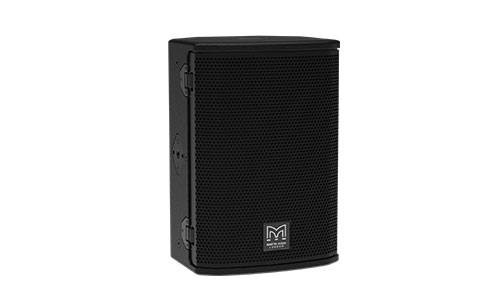
The system itself was built in multiple layers. A distributed vocal system of nine Martin Audio FlexPoint FP6 was arranged in an arc around the tent, while the band system comprised two Martin Audio Q44 columns supplemented with SXC115 subwoofers as an on-stage anchor - although the band was also fed through the vocal system. “The Q44 columns were very discrete, they were set back at each end of the band and just blended in,” notes Honywill.
Thirteen FlexPoint FP4 provided front fill across the stage edge, whilst a reverb and FX system featured a combination of 14 x FP4 and 4 x FP6 set in a ring around the tent perimeter and 4 x FP8s rigged up high. “The idea was to create a homogenous 'cloud' of FX and reverb, within which there would be movement driven by TiMax and Grapes 3D,” he describes.
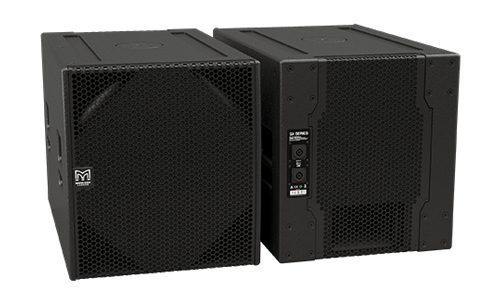
Providing plentiful low-end, SXC118 and SHX218 subwoofers were positioned beneath the seating, primarily for the whales. “The blue whale is the subbiest thing you’ve ever heard in your life!” smiles Honywill.
“There’s a consistent sonic footprint across the whole family, from the FP4 right the way up,” he continues. “The speakers sound open and transparent, and the transient response is fantastic. Operatic voices and horns don’t often go together, but Martin Audio just deals with it.”
The spatial element came courtesy of TiMax, combining live positional tracking of actors, singers and musicians via 18 TiMax D4 trackers, together with atmospheric soundtrack elements pre-programmed to fit the immersive design.
For the soundtrack, sound designer Dan Samsa and TiMax application specialist Gerry Marrone spent a day at TiMax’s studio in Tileyard, London, spatialising the content and pre-programming all the object movement using Grapes 3D software combined with TiMax2. Honywill confirms that “the entire performance was then glued together by live-tracking the actors and singers, along with the violinists, viola player, and two flute/recorder players”.
The Grapes 3D project, nested as a plugin inside the playback session, then transferred that programming through to the live shows, with the positional data running from the DAW into TiMax via OSC (Open Sound Control). With playback and spatialisation now synchronised, the pre-programmed content landed in TiMax exactly as intended, becoming one with the active TiMax cue stack.
Honeywill notes that TiMax fostered a closer connection between the audience and the performance. “TiMax enabled us to reinforce the performances effectively while making the sound system itself effectively disappear in the minds of the audience,” he says. “The tracking allows the connection between eyes and ears to be coherent. As a result, the often techno-resistant audience experienced a degree of depth, clear diction, and spatial imaging not possible with standard system deployments or other spatial processors.”
The upward firing reverb design lent subtle realism to an otherwise acoustically dead space inside the tent. “I used a Quantec 7.1 room simulator plug-in to provide a sense of space - really subtle, but if you take it away it’s so dry without it.” Reverb routing was fed from TiMax and returned back into TiMax to maintain the spatial elements.
Amplification was provided by Martin Audio’s iKON range - a combination of iK81 and iK41 models - and the system was designed and modelled in Martin Audio’s DISPLAY 3 software.
As an award-winning UK charity, Vache Baroque places special emphasis on giving young and disadvantaged people the opportunity to work alongside leading professionals, and the audio team played its part. Honywill praises the contribution of Ryan McCluskey and Charlie Dudderidge, who joined the crew for the Festival: “Both of them were great,” he says.
Reflecting on the project, he concludes, “With Martin Audio, subtlety and musicality were the order of the day. But then, when you have to reproduce the sound of a blue whale, there is a massive amount of power! Paired with TiMax’s spatial tracking, the system enabled us to provide the audience with a coherent and transparent experience entirely fitting for the event.”